Salt
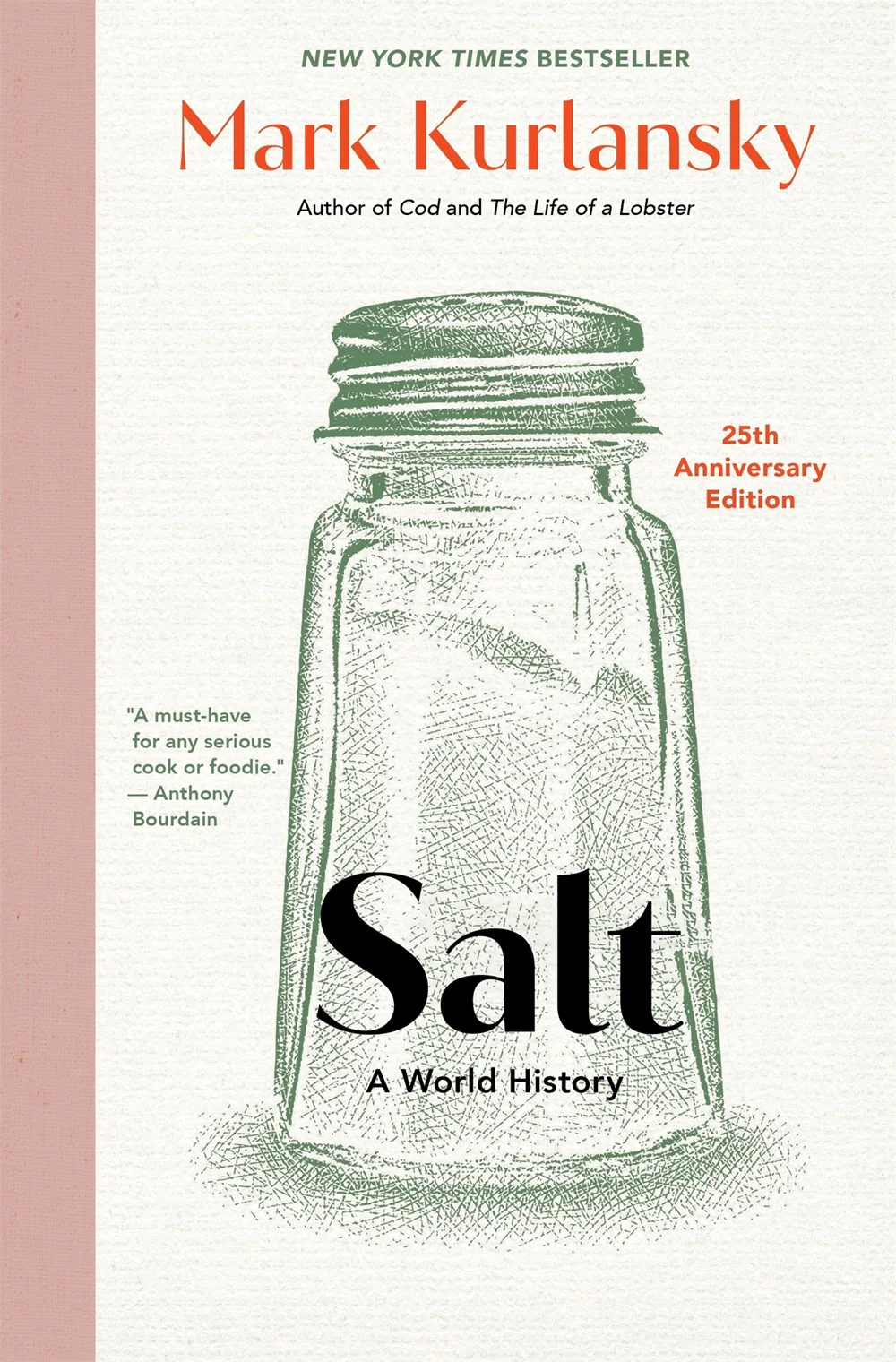
A New York Times bestselling Kurlansky fan favorite, celebrating its 25th year: The unlikely history of the world through a grain of salt—now with a handsome new package and foreword.
Homer called salt a divine substance. Plato described it as especially dear to the gods. Today we take it for granted: a common substance that seasons food and clears ice from roads. But as Mark Kurlansky relates in his classic book, salt—the only rock we eat—has shaped civilization from the very beginning.
Throughout history, salt has been so valuable that it has served as currency, and its ability to preserve life made it a common religious symbol. Demand for salt established the world’s earliest trade routes; salt inspired ingenuity from natural gas furnaces in ancient China to drilling techniques that led to the age of petroleum. All the while, salt has shaped food history by way of cod, cheese, olives, and nearly all our groceries today.
Kurlansky’s beloved Salt is a kaleidoscope of history that blends economic, political, religious, and culinary records into a rich tale. At its 25th anniversary, we’re reminded anew of this beloved rock’s glittering role in the history of humankind.
Salt
A New York Times bestselling Kurlansky fan favorite, celebrating its 25th year: The unlikely history of the world through a grain of salt—now with a handsome new package and foreword.
Homer called salt a divine substance. Plato described it as especially dear to the gods. Today we take it for granted: a common substance that seasons food and clears ice from roads. But as Mark Kurlansky relates in his classic book, salt—the only rock we eat—has shaped civilization from the very beginning.
Throughout history, salt has been so valuable that it has served as currency, and its ability to preserve life made it a common religious symbol. Demand for salt established the world’s earliest trade routes; salt inspired ingenuity from natural gas furnaces in ancient China to drilling techniques that led to the age of petroleum. All the while, salt has shaped food history by way of cod, cheese, olives, and nearly all our groceries today.
Kurlansky’s beloved Salt is a kaleidoscope of history that blends economic, political, religious, and culinary records into a rich tale. At its 25th anniversary, we’re reminded anew of this beloved rock’s glittering role in the history of humankind.
Product Information
Product Information
Shipping & Returns
Shipping & Returns
Description
A New York Times bestselling Kurlansky fan favorite, celebrating its 25th year: The unlikely history of the world through a grain of salt—now with a handsome new package and foreword.
Homer called salt a divine substance. Plato described it as especially dear to the gods. Today we take it for granted: a common substance that seasons food and clears ice from roads. But as Mark Kurlansky relates in his classic book, salt—the only rock we eat—has shaped civilization from the very beginning.
Throughout history, salt has been so valuable that it has served as currency, and its ability to preserve life made it a common religious symbol. Demand for salt established the world’s earliest trade routes; salt inspired ingenuity from natural gas furnaces in ancient China to drilling techniques that led to the age of petroleum. All the while, salt has shaped food history by way of cod, cheese, olives, and nearly all our groceries today.
Kurlansky’s beloved Salt is a kaleidoscope of history that blends economic, political, religious, and culinary records into a rich tale. At its 25th anniversary, we’re reminded anew of this beloved rock’s glittering role in the history of humankind.